I built Marinext AIOS because AI is already in business, but it isn't yet working as a department.
“I don't create automations, I create systems that make teams faster, smarter, and more scalable.”
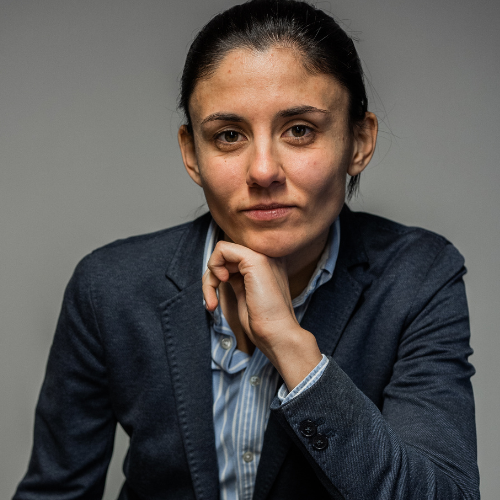
Ten years of consulting. Two years of AI. Three companies. One operating system.
I'm Mariela Slavenova.
After about six years running a digital agency, I started working with businesses on process automation and on bringing artificial intelligence into their real, day-to-day work.
Over time I saw that the problem rarely sits in a lack of tools. Some companies are already using AI in some way, but without a shared structure, without a clear assignment of roles, and without enough control over the result.
So I started thinking about AI not as a separate tool, but as a new operating layer in the business.
That's how Marinext AIOS was born: a system that helps companies build AI-powered departments with company memory, digital employees, processes and human control.
We're starting with marketing, but the same model can be applied to sales, human resources, administration, accounting and other key functions, depending on what the company needs.
The Harden Method.
Every system I build goes through the same standard: if automation can't survive the testing phase, it doesn't go to market. That's the test for every workflow, every agent, every release.
Build it once.
Break it on purpose.
Fix what broke.
Only then do you hand it to the client.
I don't create automations, I create systems that make teams faster, smarter, and more scalable.
Founder · Marinext AIOS — Mariela Slavenova
What's live, what's next.
Marketing OS
LiveBrand brain, agents, sprints, review queue, publishing calendar, cost ledger. The first commercial module.
Sales OS
NextPipeline brain, enrichment agents, follow-up workflows, deal review. Same architecture, sales surface.
Support OS
After SalesKnowledge brain, triage agents, response workflows, escalation review.
Public roadmap
SoonOperations, HR, Finance modules. Each adds to the same OS, not a new one.
Let's build your AI department.
The same standard, the same architecture — applied to your business.